EN
EN
 Chinese
 Turkish
 Indonesian
 German
 French
 Spanish
 Portuguese
 Russian
 Italian

What is a Color Sorter Machine? How Does It Work and Why Is It Essential for Modern Industries?
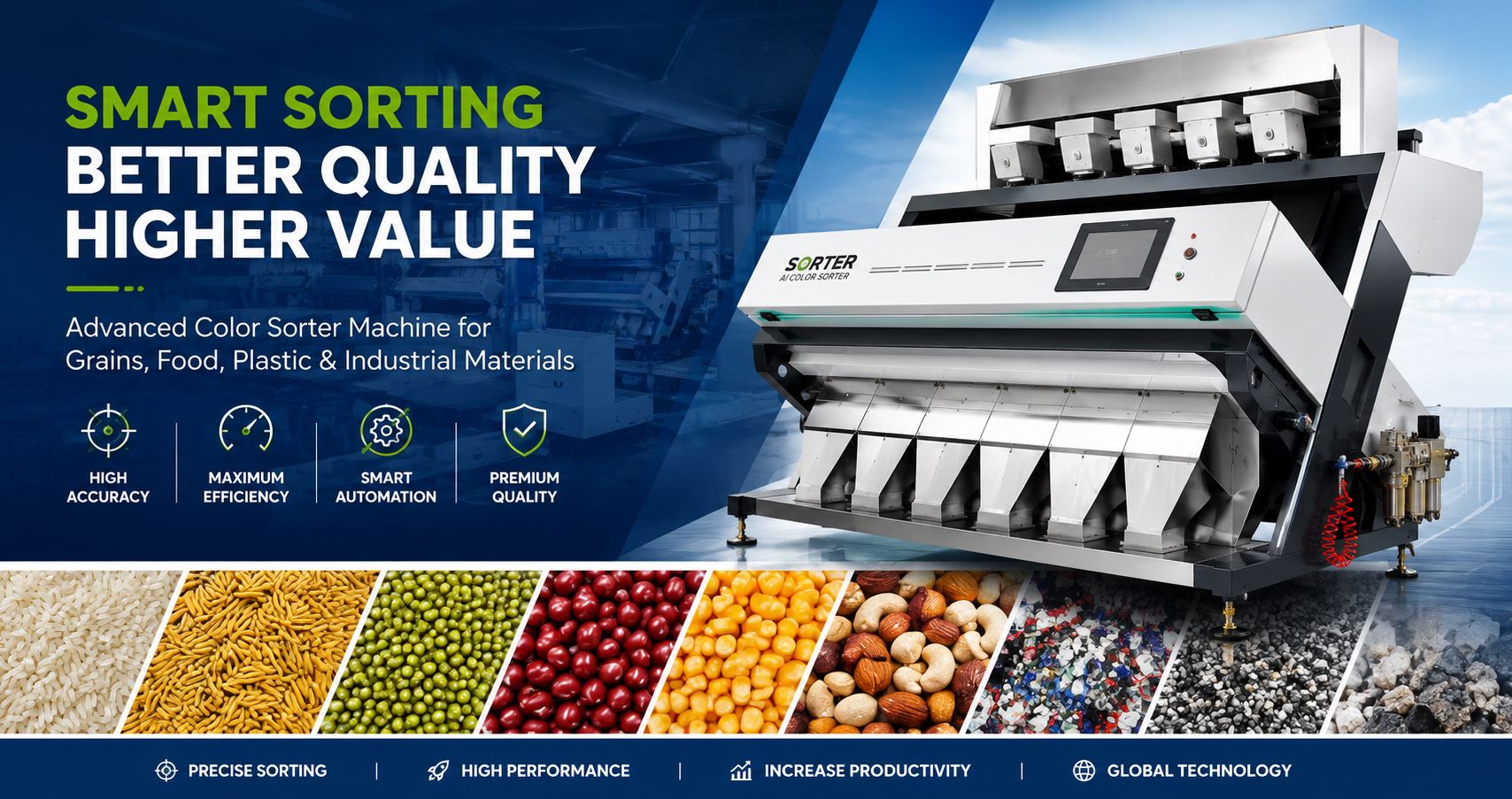
In today's highly competitive manufacturing environment, product quality, consistency, and production efficiency are more important than ever. Industries such as rice milling, food processing, coffee, nuts, grains, plastics, recycling, and seed processing require advanced technologies to maintain international quality standards. One of the most significant innovations that has transformed these industries is the Color Sorter Machine. This intelligent optical sorting technology helps manufacturers produce cleaner, safer, and higher-quality products while reducing labor costs and minimizing material waste.
What is a Color Sorter Machine?
A Color Sorter Machine is an advanced optical sorting system that automatically separates products based on their color, shape, size, texture, and surface defects. Using high-resolution cameras, LED lighting, intelligent sensors, and artificial intelligence (AI)-powered software, the machine inspects every individual product as it passes through the sorting channel. Defective, discolored, broken, or contaminated materials are instantly identified and removed using high-speed air ejectors, ensuring that only premium-quality products continue through the production line. Modern color sorting technology offers a level of speed and accuracy that is impossible to achieve through manual inspection, making it an essential solution for manufacturers aiming to improve quality and productivity.
How Does a Color Sorter Machine Work?
The sorting process begins when raw materials such as rice, wheat, coffee beans, pulses, seeds, nuts, plastics, or recycled materials are fed into the machine through a vibration feeder. The feeder spreads the products into a single layer, allowing each item to be inspected individually. As the products move through the inspection area, powerful LED lighting illuminates every item while high-speed CCD or CMOS cameras capture detailed images. These images are instantly analyzed by sophisticated software that compares each product with predefined quality standards. Artificial Intelligence and machine vision algorithms identify defective products based on differences in color, shape, texture, cracks, spots, mold, foreign materials, or other imperfections. Once an unwanted item is detected, the system activates a high-speed pneumatic air ejector that removes only the defective material without interrupting the flow of the good products. The result is a highly efficient sorting process that delivers exceptional accuracy, improves product quality, and significantly reduces production losses.
Key Components of a Color Sorter Machine
A modern Color Sorter Machine consists of several advanced technologies working together to achieve precise sorting performance. These include:
- High-resolution CCD or CMOS cameras
- LED illumination system
- Optical sensors
- Artificial Intelligence (AI) software
- Machine Vision technology
- High-speed air ejectors
- Intelligent control system
- Touchscreen operating interface
- Together, these components enable the machine to inspect thousands of products every second with remarkable precision.
Applications Across Multiple Industries
Color Sorter Machines are widely used across various industries where product quality is critical. In the rice milling industry, they remove discolored grains, stones, and damaged rice to produce premium-quality rice for domestic and international markets. In food processing, they are used for sorting pulses, wheat, maize, beans, coffee, cocoa, spices, peanuts, almonds, sesame seeds, and dried fruits. These machines help food manufacturers meet strict food safety and export quality requirements. The recycling industry also benefits significantly from optical sorting technology. Color Sorter Machines efficiently separate plastics, glass, metals, and electronic waste based on color and material characteristics, improving recycling efficiency while reducing contamination. They are equally valuable in seed processing, animal feed production, mineral processing, tea manufacturing, and many other industrial applications.
Why is a Color Sorter Machine Essential for Modern Industries?
As global competition continues to increase, manufacturers must consistently produce high-quality products while controlling costs. Color Sorter Machines provide an effective solution by combining speed, precision, and automation. One of the greatest advantages is improved product quality. The machine removes defective, damaged, contaminated, or discolored materials with exceptional accuracy, ensuring a uniform final product that meets customer expectations. Production efficiency also increases dramatically. Unlike manual sorting, which is slow and labor-intensive, a Color Sorter Machine can inspect and sort several tons of materials every hour while maintaining consistent quality. Automation significantly reduces labor costs. Manufacturers no longer need large teams of workers to manually inspect products, allowing them to reduce operating expenses while increasing productivity.
The technology also minimizes product waste by removing only defective items instead of discarding large quantities of acceptable products. This improves raw material utilization and increases profitability. For food manufacturers, Color Sorter Machines play a vital role in food safety by eliminating foreign materials, damaged products, mold-affected grains, and impurities before packaging. This helps companies comply with international food safety regulations and export standards.
The Role of Artificial Intelligence in Modern Color Sorting
The latest generation of Color Sorter Machines incorporates Artificial Intelligence (AI), Deep Learning, and Machine Vision technologies. Unlike conventional systems that only recognize color differences, AI-powered machines can identify complex defects, texture variations, cracks, insect damage, mold, and other quality issues with exceptional accuracy. As AI technology continues to evolve, modern sorting systems are becoming smarter, faster, and more adaptable, allowing manufacturers to achieve even higher productivity and superior quality control.
Benefits of Investing in a Color Sorter Machine
- Companies that invest in Color Sorter Machines enjoy numerous long-term advantages, including:
- Higher product quality and consistency
- Increased production efficiency
- Reduced labor costs
- Improved food safety
- Lower material waste
- Better export-quality products
- Increased customer satisfaction
- Higher profitability
- Enhanced production automation
- Greater competitiveness in global markets
The Future of Optical Sorting Technology
Optical sorting technology is becoming an integral part of Industry 4.0 and smart manufacturing. With the integration of AI, IoT, cloud monitoring, and intelligent automation, future Color Sorter Machines will become even more efficient, capable of self-learning and continuously improving sorting accuracy.
As industries worldwide continue to adopt digital manufacturing technologies, Color Sorter Machines will remain one of the most valuable investments for companies seeking sustainable growth, operational excellence, and international competitiveness.
Conclusion
A Color Sorter Machine is no longer a luxury—it has become an essential technology for modern manufacturing. Whether in rice milling, food processing, agriculture, recycling, seed production, or industrial manufacturing, optical sorting systems deliver unmatched accuracy, efficiency, and product quality.
Businesses that embrace advanced sorting technology can reduce costs, improve operational performance, meet international quality standards, and strengthen their position in the global marketplace. As automation and artificial intelligence continue to reshape manufacturing, Color Sorter Machines will play an increasingly important role in driving productivity, sustainability, and long-term business success.
About the Author